【EMI教師增能講座】美國學術交流基金會(Fulbright) - EMI課堂提問策略實務講座
一、活動重點及目的:
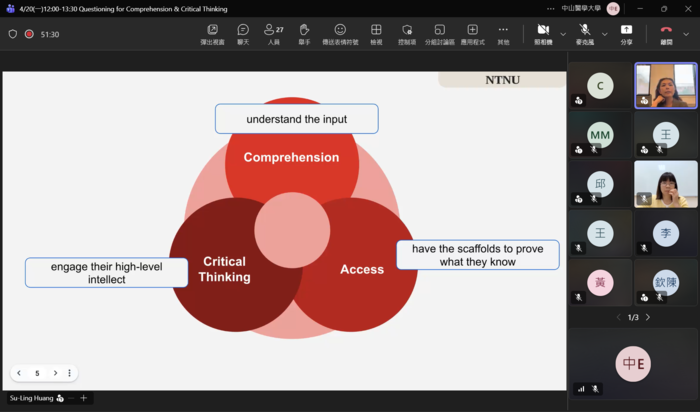
本次講座邀請美國學術交流基金會(Fulbright Program)Su-Ling顧問,聚焦於如何透過有效提問促進學生理解與批判思考能力。活動強調,在EMI課程中,教師的核心任務並非教授語言本身,而是以英語作為媒介,引導學生理解學科內容並進一步產出知識。講座指出,理解的起點在於「正確提問」,學生需具備辨識問題與建構問題的能力,方能展開有意義的學習歷程。同時,批判思考不應流於複製貼上,而須透過具學術嚴謹性的思考歷程,培養學生的主體性與基本學術素養。講者亦強調,思考能力並不依賴語言流暢度,教師可透過設計具層次性的問題,引導學生從低層次理解逐步邁向高層次分析與創新。此外,本活動亦期望協助教師釐清提問目的,精準選擇動詞與語言形式,以促進學生表達與思考能力的同步發展,最終達成「理解問題、進而解決問題」的教學目標。
We invited Su-Ling, a consultant from the Fulbright Program, and focused on how effective questioning can enhance students’ comprehension and critical thinking skills. The session emphasized that in EMI courses, the primary role of instructors is not to teach the language itself, but to use English as a medium to help students understand disciplinary content and further generate knowledge. The speaker highlighted that the starting point of understanding lies in asking the “right questions.” Students must be able to identify and formulate questions in order to engage in meaningful learning processes. At the same time, critical thinking should go beyond mere copying and pasting; it requires academically rigorous thinking processes that cultivate students’ agency and foundational academic literacy. The speaker also stressed that thinking ability is not dependent on language fluency. Through well-designed and scaffolded questions, teachers can guide students from lower-level understanding to higher-order analysis and innovation. In addition, this session aimed to help instructors clarify the purpose of questioning and select precise verbs and language forms to support the simultaneous development of students’ expression and thinking skills, ultimately enabling them to understand and solve problems effectively.
二、活動特色及執行情形:
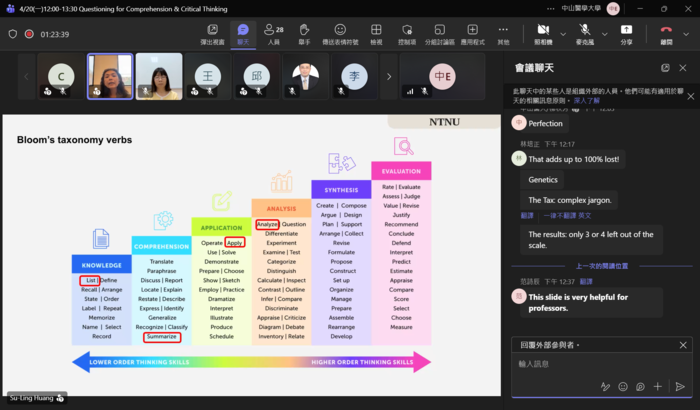
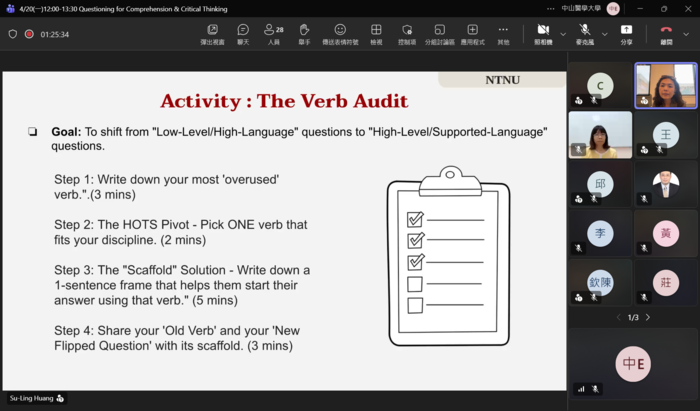
本次講座引導教師檢視自身課堂中的提問方式與語言使用,並強調教師在設計問題前,應先明確思考學生需達成的理解目標,並透過動詞的精準選擇(如analyze、evaluate、explain等)來引導學生進行不同層次的思考。活動中特別指出,日常教學中過度使用口語或模糊表達,易影響學生對概念的掌握,因此應提升語言的學術性與明確性,以支持學生理解專業知識。此外,講座亦強調「思考具有模式性」,透過有系統的提問順序(sequencing),可幫助學生逐步建構知識並提升表達能力。在執行層面上,活動鼓勵教師設計需即時回應的問題情境,以降低學生依賴AI工具作答的可能性,並促進其主動參與探索學習歷程。同時,也倡議教師之間建立對話與交流機制,共同精進教學策略。整體而言,本次活動不僅強化教師在EMI課堂中的提問設計能力,更深化其對學生學習歷程與思考發展的理解。
The speaker further guided the teachers to reflect on their own questioning strategies and language use in the classroom. It emphasized that before designing questions, teachers should first clearly identify the intended learning outcomes for students, and then use precise verbs (such as analyze, evaluate, and explain) to prompt different levels of thinking. The session also pointed out that excessive use of casual or vague language in teaching may hinder students’ conceptual understanding; therefore, instructors should enhance the academic precision and clarity of their language to better support content comprehension. Moreover, the lecture highlighted that “thinking follows patterns,” and that well-structured sequencing of questions can help students gradually build knowledge and improve their ability to express ideas. In terms of implementation, teachers were encouraged to design questions that require immediate, in-class responses, thereby reducing students’ reliance on AI tools and promoting active engagement and inquiry-based learning. Additionally, the session advocated for ongoing dialogue and collaboration among instructors to continuously refine teaching practices. Overall, this lecture not only strengthened teachers’ ability to design effective questions in EMI classrooms but also deepened their understanding of students’ learning processes and cognitive development.
三、活動之質量化指標:參加人數 24 人,參與滿意度 93.31 %