一、活動重點及目的:
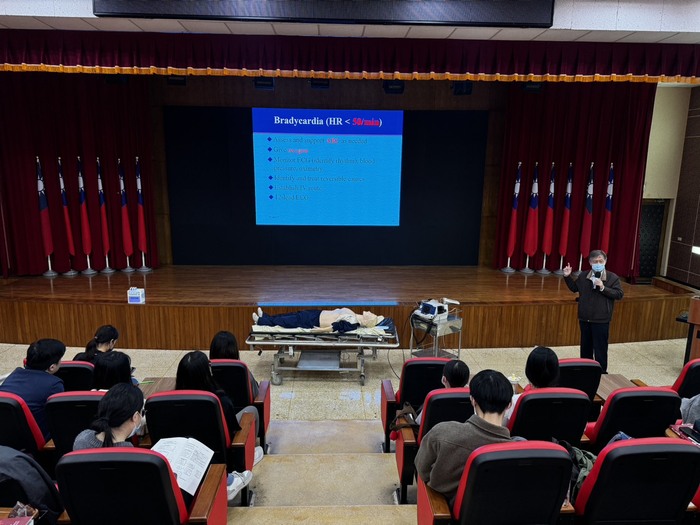
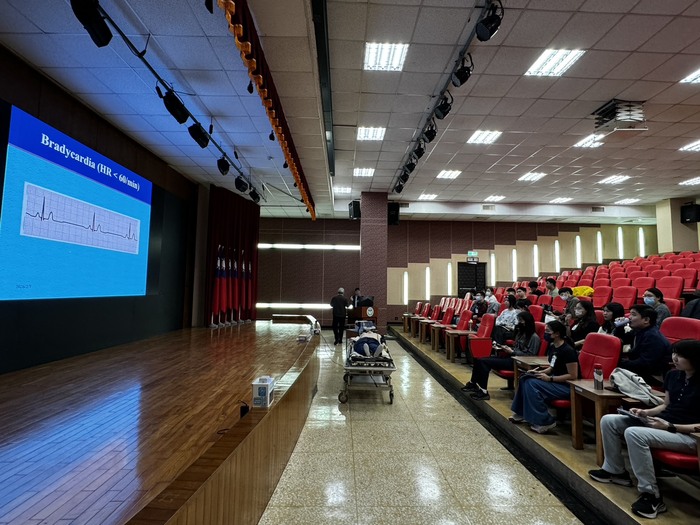
本次活動由 EMI 中心與臺南市緊急救護協會共同辦理「ACLS 高級心臟救命術(Advanced Cardiac Life Support, ACLS)證照課程」,主要對象為本校醫學系與護理系學生。課程旨在培養學生於心血管緊急事件中進行系統性評估、臨床決策與團隊合作處置之能力,並結合 EMI 英語融入元素,強化學生於國際醫療或跨文化臨床情境中,以英語進行專業溝通與急救指令表達之能力。透過理論講授與情境模擬訓練,提升學生臨床急救實務能力與國際應變素養。
The ACLS (Advanced Cardiac Life Support) Certification Course was jointly organized by the EMI Center and the Tainan Emergency Medical Association, primarily for students from the Departments of Medicine and Nursing. The course aimed to develop students’ abilities to conduct systematic assessments, make clinical decisions, and provide appropriate team-based interventions during cardiovascular emergencies. EMI elements were incorporated into the course to strengthen students’ ability to communicate professionally in English and deliver emergency response instructions in international medical and cross-cultural clinical settings. Through theoretical instruction and scenario-based simulation training, the course enhanced students’ practical emergency response skills and preparedness for international clinical settings.
二、活動特色及執行情形:
本次 ACLS 課程採案例導向教學(case-based learning)與情境模擬演練方式進行,內容涵蓋急救通用流程(Universal Algorithm)、高品質心肺復甦術(high-quality CPR)、去顫電擊(defibrillation)、藥物治療時機,以及團隊溝通與角色分工等核心能力。課程重點包含心律不整判讀與處置,如心室顫動(ventricular fibrillation, VF)、無脈性心室頻脈(pulseless ventricular tachycardia, VT)、無脈電活動(pulseless electrical activity, PEA)與心搏停止(asystole),並結合可逆原因評估(H’s & T’s)進行臨床判斷訓練。
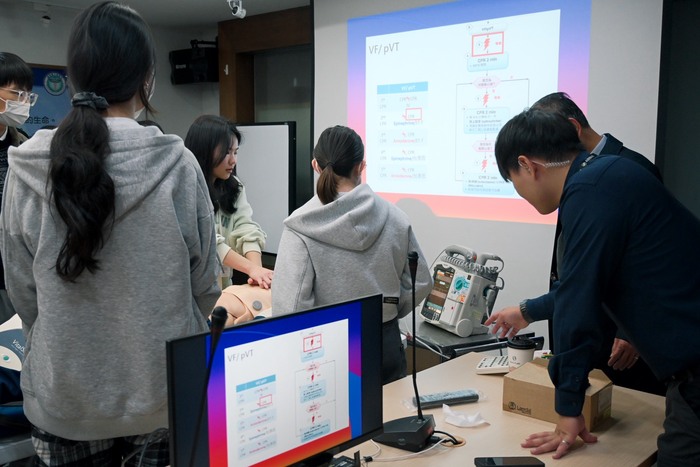
實作課程採分站教學(station-based training),包含 Basic Life Support(BLS)技能強化、經皮心臟節律器(transcutaneous pacing, TCP)操作、進階呼吸道處置(advanced airway management)、急性腦中風(acute stroke)初步評估,以及心跳恢復後照護(post–cardiac arrest care)與目標溫度管理(targeted temperature management, TTM)等內容。透過 Mega Code 模擬演練,使學生於高壓情境下進行即時判斷與團隊領導。
整體課程融入 EMI 英語教學設計,於講授與模擬過程中導入急救專業英語術語、團隊溝通指令與臨床對話演練,使學生熟悉國際 ACLS 指引用語與急救流程表達方式。透過理論與實作並重之雙語教學模式,強化學生臨床專業能力,同時提升其英語醫療溝通能力與國際臨床競爭力。
The ACLS course adopted case-based learning and scenario-based simulation training, covering core competencies including the Universal Algorithm, high-quality CPR, defibrillation, medication administration, team communication, and role allocation. The course focused on the recognition and management of cardiac arrhythmias, including ventricular fibrillation (VF), pulseless ventricular tachycardia (VT), pulseless electrical activity (PEA), and asystole, as well as clinical decision-making based on the assessment of reversible causes (H’s & T’s).
The hands-on sessions adopted a station-based training approach, covering Basic Life Support (BLS) skills reinforcement, transcutaneous pacing (TCP), advanced airway management, initial assessment of acute stroke, post-cardiac arrest care, and targeted temperature management (TTM). Through Mega Code simulation exercises, students practiced making real-time clinical decisions and leading a team under high-pressure emergency situations.
EMI elements were integrated throughout the course by incorporating emergency medical terminology, team communication commands, and clinical dialogue practice in English into both lectures and simulation exercises. This enabled students to become familiar with international ACLS terminology and ways of communicating emergency procedures. Through a balanced combination of theoretical instruction and hands-on practice with bilingual EMI elements, the course strengthened students’ clinical competencies while enhancing their English medical communication skills and international clinical competitiveness.
三、活動之質量化指標:
參加人數17人,參與滿意度96.8%
最後更新日期 2026/8/18