一、活動重點及目的:
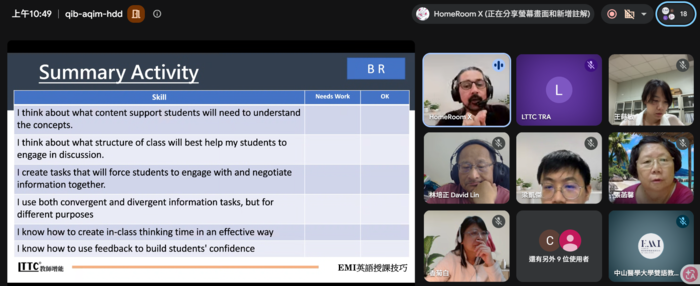
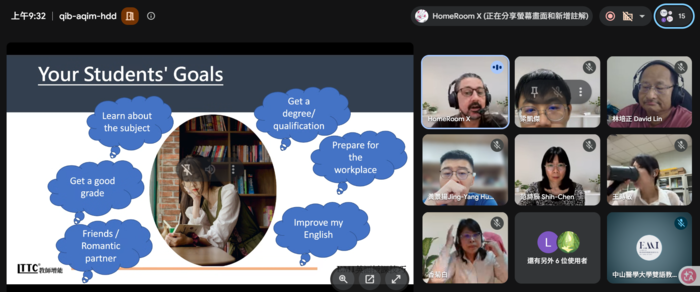
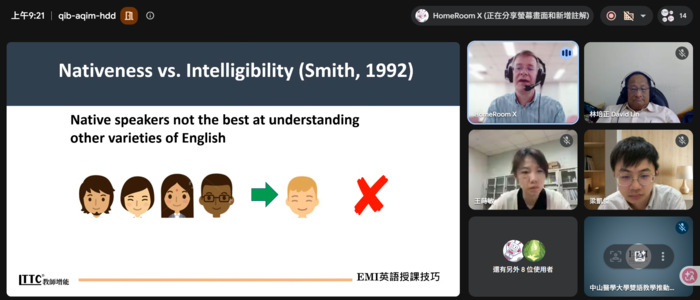
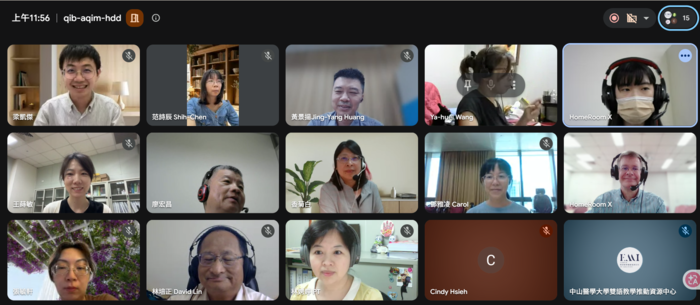
本次「LTTC全英語 EMI 師資培訓課程」系列課程邀請 LTTC 講師 Henry Chang、John Ring 與 Simon Pereira 擔任講者,課程採非同步課程搭配三場線上同步課程方式進行,內容涵蓋英語作為通用語(ELF)教與學思維、課堂專題討論的互動技巧、口語表達基礎概念與實作演練、微型教學與同儕觀摩等主題,透過循序漸進的培訓,協助教師全面提升EMI教學知能。
課程首先由非同步課程建立EMI教學核心理念,從英語作為通用語(ELF)觀點出發,強調以國際可理解性(Intelligibility)為目標,透過提升發音清晰度、適切運用教學語言及表達策略,降低學生語言理解負擔,並建立以學生理解為核心的EMI教學思維。後續同步課程進一步介紹EMI英語口語表達技巧、跨文化素養與多元文化學習環境建構,引導教師運用互動式教學策略培養學生跨文化溝通能力;最後透過微型教學與同儕觀課,協助教師反思教學設計,精進課堂互動及協作學習活動規劃能力,進一步提升EMI課程教學品質與學生學習成效。
The “LTTC EMI Teacher Training Program” invited LTTC instructors Henry Chang, John Ring, and Simon Pereira as guest speakers. The program consisted of asynchronous online courses combined with three synchronous online sessions. Topics covered the teaching and learning of English as a Lingua Franca (ELF), interactive techniques for seminar discussions, fundamental concepts and practical applications of spoken English, microteaching, and peer observation. Through a progressive training approach, the program aimed to comprehensively enhance teachers’ knowledge and skills in EMI instruction.
The program began with asynchronous courses designed to establish the core concepts of EMI instruction. From the perspective of English as a Lingua Franca (ELF), the courses emphasized international intelligibility as a key instructional goal. Teachers were introduced to strategies for improving pronunciation clarity, using instructional language appropriately, and applying effective communication strategies to reduce students’ language processing burden and develop a student-centered approach to EMI instruction. The subsequent synchronous sessions further introduced techniques for effective spoken English in EMI classrooms, intercultural competence, and the development of diverse and multicultural learning environments. Teachers were guided to apply interactive teaching strategies to foster students’ intercultural communication skills. Finally, through microteaching and peer observation, teachers were encouraged to reflect on their instructional design and further develop their abilities to facilitate classroom interaction and design collaborative learning activities, thereby enhancing the quality of EMI instruction and student learning outcomes.
二、活動特色及執行情形:
本系列課程採非同步自主學習結合線上同步研習方式辦理,由教師先完成英語作為通用語(ELF)相關課程,建立EMI教學基礎概念,再透過同步課程進行實務應用與交流,兼顧理論學習與教學實踐。課程內容涵蓋提升英語可理解性的口語表達技巧,包括發音、停頓、重音及訊息組織,並介紹Instructional Languaging、後設論述(Metadiscourse)及重複(Repetition)、改述(Paraphrasing)、舉例(Examples)與訊號語(Signposting)等教學策略,協助教師有效組織課程內容、強化重點訊息並降低學生認知負荷。
此外,課程分享提升學生課堂參與及跨文化溝通的方法,包括多模態教材運用(Multimodal Representation)、鷹架策略(Scaffolding)、翻轉教室、合作學習及課堂討論設計等EMI教學策略,並安排教師進行微型教學演練與同儕觀課,透過觀課評量、自我反思及交流回饋,檢視教學表達、教材設計及互動活動規劃。參與教師積極投入課堂討論與經驗分享,學習多項可直接應用於EMI課程之教學方法,深化EMI教學實踐能力,進一步打造兼具互動性、包容性及學習成效的EMI課堂。
The program combined asynchronous self-paced learning with synchronous online training sessions. Teachers first completed courses related to English as a Lingua Franca (ELF) to establish a foundation in EMI teaching concepts, followed by synchronous sessions focusing on practical application and professional exchange, thereby integrating theoretical learning with teaching practice.
The program covered techniques for enhancing English intelligibility in spoken communication, including pronunciation, pausing, stress, and information organization. It also introduced instructional strategies such as Instructional Languaging, Metadiscourse, Repetition, Paraphrasing, Examples, and Signposting. These strategies helped teachers organize course content effectively, highlight key information, and reduce students’ cognitive load.
In addition, the program introduced approaches to increasing student engagement and fostering intercultural communication, including the use of Multimodal Representation, Scaffolding, the Flipped Classroom, Collaborative Learning, and classroom discussion design. Teachers also participated in microteaching practice and peer observation. Through observation-based evaluation, self-reflection, and professional feedback, teachers reviewed their instructional communication, teaching material design, and planning of interactive learning activities.
Participating teachers actively engaged in classroom discussions and shared their teaching experiences. Through the program, they acquired a range of practical teaching strategies that could be directly applied to EMI courses, deepened their EMI teaching competencies, and further developed interactive, inclusive, and learning-oriented EMI classrooms.
三、活動之質量化指標:
參加人數 12 人,參與滿意度 98.63 %
最後更新日期 2026/8/10