一、活動重點及目的:
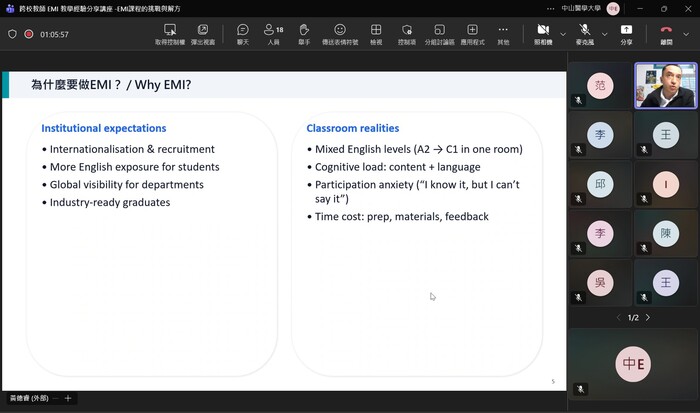
本次講座旨在釐清推動EMI的核心目的與精神,說明EMI不僅是以英語授課,更是一種兼顧學科學習與語言支持的課程設計模式,協助教師理解EMI的定位與價值。講師進一步分享其EMI課程的實際運作流程,包含課前準備、課中互動與課後評量,並說明在清晰的教學政策與任務設計下,如何適度導入AI工具作為學習輔助。透過本次講座,期望協助各教師從課程設計的角度思考EMI,提升教學實務可行性,並促進EMI教學永續發展。
This lecture aimed to clarify the core purposes and principles of promoting EMI, emphasizing that EMI is not merely teaching in English, but a course design approach that integrates disciplinary learning with intentional language support. The speaker further shared the practical operation of EMI courses, including pre-class preparation, in-class interaction, and post-class assessment, and explained how AI tools can be appropriately incorporated as learning support under clear instructional policies and well-designed tasks. Through this lecture, the event sought to assist instructors in approaching EMI from a course design perspective, enhance the feasibility of teaching practices, and promote the sustainable development of EMI instruction.
二、活動特色及執行情形:
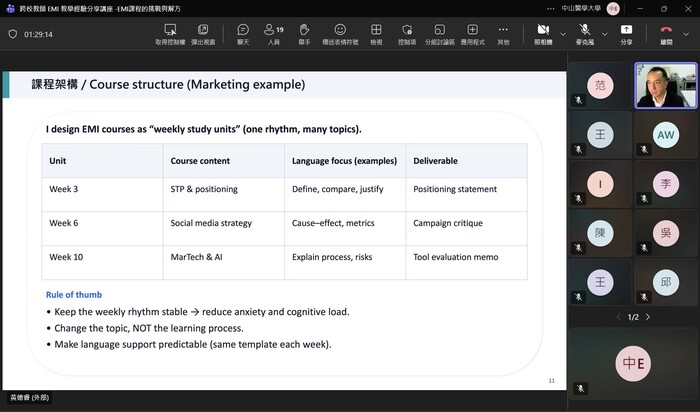
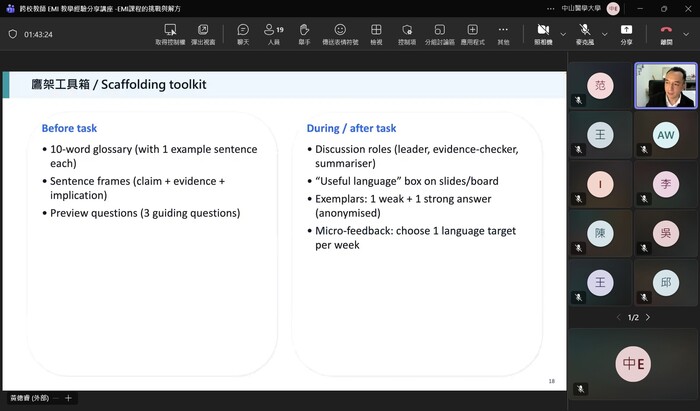
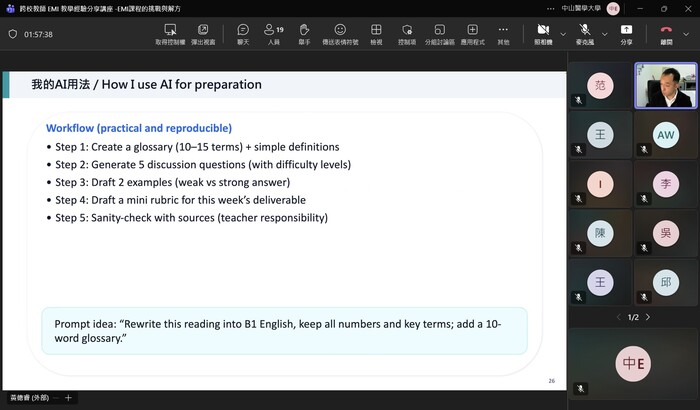
本次講座邀請朝陽科技大學行銷與流通管理系Serhan Demirci助理教授,分享其實際執行EMI課程之經驗,針對教師在EMI教學現場常見的挑戰,提供可直接應用於課堂的具體策略。除了系統性介紹EMI課程的整體架構,從穩定的每週學習單元設計、課堂活動銀行、鷹架工具箱,以協助教師在教學中兼顧學習成效與學生語言焦慮的降低,講師更依序說明課前規劃、課堂實施與課後評量的整體設計,並針對AI工具的應用,講解如何在明確的使用規範下,將AI作為輔助學習與思考延伸的工具,而非取代學生學習歷程。本次活動不僅提供完整且系統化的EMI教學實務分享,也促進教師對EMI教學設計的深入反思,對未來EMI課程推動具有實質助益。
We invited Assistant Professor Serhan Demirci from the Department of Marketing and Distribution Management at Chaoyang University of Technology to share his practical experience in implementing EMI courses. Addressing common challenges encountered by instructors in EMI classrooms, he provided concrete strategies that can be directly applied during teaching. In addition to systematically introducing the overall framework of EMI course design such as Weekly unit template, Activity bank, Scaffolding toolkit and so on to demonstrate how instructors can balance learning effectiveness while reducing students’ language anxiety. The speaker further explained the integrated design of pre-class planning, in-class implementation, and post-class assessment, and discussed how AI tools can be utilized as supports for learning and extended thinking under clear usage guidelines, rather than replacing students’ learning processes. Overall, this event offered a comprehensive and structured sharing of EMI teaching practices, encouraged in-depth reflection on EMI course design, and provided substantial support for the future development of EMI courses.
三、活動之質量化指標:
參加人數16人,參與滿意度97.7%
最後更新日期2026/02/09